
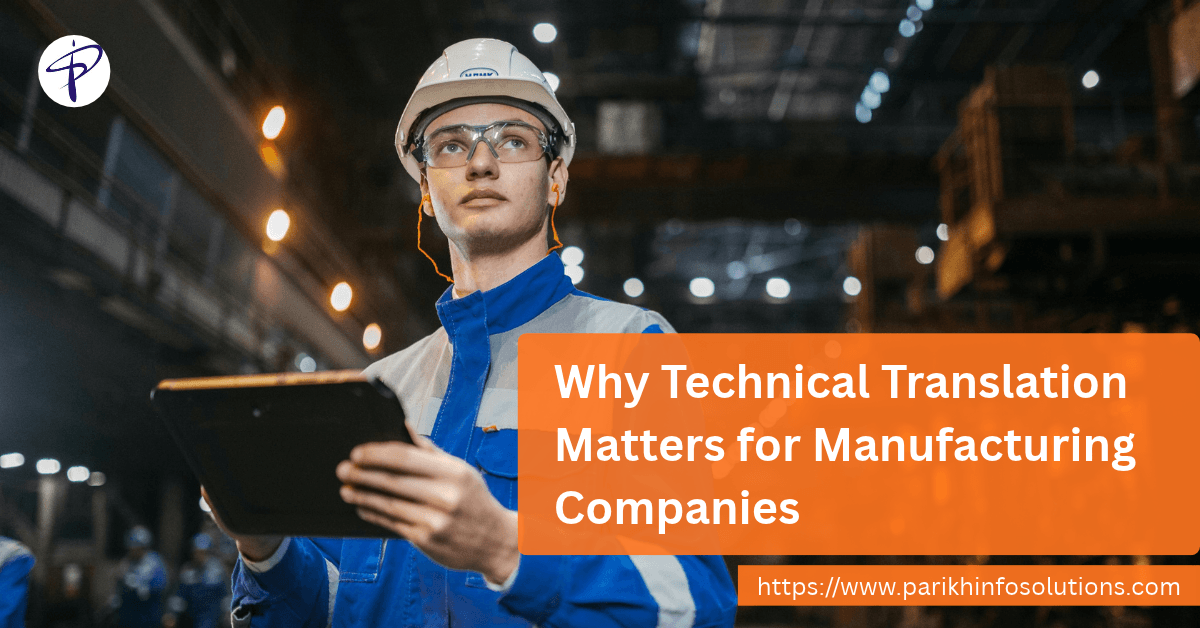
Manufacturing companies increasingly work with international suppliers, overseas customers, equipment manufacturers, and distribution partners. As businesses expand into new markets, they often need to share technical information across languages.
This information may include machine operating manuals, installation guides, safety instructions, engineering specifications, maintenance procedures, product catalogues, and quality documentation. Translating these materials accurately is essential for communicating instructions and technical requirements clearly.
Technical translation is the translation of specialised content that requires an understanding of industry terminology, technical concepts, and the intended use of the document.
For manufacturing companies, technical translation is more than converting words from one language to another. It helps employees, customers, suppliers, and service teams understand complex information consistently.
In this article, we explore why technical translation matters in manufacturing, which documents commonly require it, and how companies can manage technical translation projects effectively.
What Is Technical Translation in Manufacturing?
Technical translation involves translating documents containing specialised terminology, processes, specifications, and instructions used in technical or industrial environments.
In manufacturing, this may cover information related to machinery, electrical systems, automotive components, industrial equipment, pharmaceuticals, electronics, chemicals, and other specialised products.
For example, a machine manufacturer based in India exporting equipment to another country may need its operating manual translated into the customer’s language. The translation must preserve the original instructions, technical terms, warnings, measurements, and procedural steps.
Technical translation is commonly used for:
- Machine and equipment operating manuals
- Installation and maintenance guides
- Engineering drawings and technical specifications
- Product datasheets and catalogues
- Standard operating procedures (SOPs)
- Workplace safety instructions
- Quality control and inspection documentation
- Troubleshooting guides
- Training materials for operators and technicians
- Technical reports and manufacturing process documents
The exact requirements depend on the product, industry, destination market, and applicable regulations.
1. Improves Workplace Safety
Manufacturing environments may involve heavy machinery, electrical equipment, hazardous materials, high temperatures, and complex production processes. Employees need to understand relevant instructions and warnings before operating equipment or performing maintenance.
If safety information is poorly translated, workers may misunderstand a procedure, warning, or restriction.
Accurate translation helps make important information accessible to employees who use different languages. It can support clearer communication of:
- Equipment operating instructions
- Emergency procedures
- Hazard warnings and precautionary measures
- Personal protective equipment requirements
- Lockout and maintenance procedures
- Chemical handling instructions
However, translation alone does not guarantee workplace safety. Companies must also provide suitable training, verify that instructions match the equipment, and comply with applicable safety requirements.
2. Supports International Business Expansion
Manufacturers entering international markets often need to provide product information in languages understood by local customers, distributors, technicians, and business partners.
A product may be technically advanced, but unclear documentation can make it harder for customers to understand its features, installation requirements, and correct use.
Technical translation can help manufacturers prepare:
- Product manuals for overseas customers
- Technical brochures and product catalogues
- Installation and commissioning instructions
- Distributor training materials
- Service and troubleshooting documentation
- Product specifications for international buyers
Providing well-translated documentation can improve the customer experience and help business partners work with products more confidently.
Companies should also consider whether their destination markets have specific language, labelling, or documentation requirements.
3. Reduces Miscommunication and Costly Errors
Technical documents often contain precise instructions, measurements, component names, operating limits, and process parameters. Even a small translation error can cause confusion.
For instance, an unclear instruction in a maintenance manual could lead a technician to misunderstand the sequence of a procedure. An inconsistent component name could also complicate communication between a manufacturer and its service team.
Professional technical translation helps reduce these risks by focusing on terminology, context, consistency, and document structure.
To improve translation quality, manufacturing companies should consider:
- Maintaining an approved glossary of technical terms
- Using consistent terminology across related documents
- Providing reference materials and product information
- Reviewing critical instructions with qualified subject-matter experts
- Checking numbers, units, symbols, model names, and warnings
- Updating translations when the source documentation changes
The goal is to minimise avoidable misunderstandings and make technical information easier to use.
4. Ensures Consistency Across Technical Documentation
Manufacturing companies often produce multiple documents for the same product or equipment. These may include user manuals, parts catalogues, maintenance guides, training materials, and troubleshooting instructions.
If different translators use different terms for the same component or process, employees and customers may become confused.
For example, a component described by one term in an operating manual should not unexpectedly be given a different name in the maintenance guide if both refer to the same part.
Terminology management helps maintain consistency across documents and language versions.
Manufacturers can improve consistency by developing:
- Company-specific terminology glossaries
- Translation memories for recurring content
- Standardised document templates
- Approved translations of product names and component labels
- A review process for new and revised terminology
These resources are particularly useful for companies that regularly update manuals or maintain large product portfolios.
5. Helps Meet Market and Documentation Requirements
Depending on the product and destination market, manufacturers may need to provide technical information in one or more specified languages.
Requirements can differ across industries and jurisdictions. Certain products may be subject to rules covering user instructions, safety information, labelling, conformity documentation, or other technical materials.
For example, a manufacturer exporting machinery may need to assess the language and documentation requirements applicable to the product in its destination market.
Technical translation can support this process by making required information available in the appropriate language. However, translation does not by itself establish regulatory compliance.
Manufacturers should confirm applicable requirements with qualified regulatory or compliance professionals and ensure that translated documents accurately reflect the approved source materials.
6. Improves Customer Support and Equipment Maintenance
Clear technical documentation helps customers and service teams understand how to install, operate, maintain, and troubleshoot equipment.
When manuals and maintenance instructions are available in the user’s preferred language, customers may find it easier to follow the recommended procedures and identify the information they need.
Technical translation can support customer service through:
- Troubleshooting guides
- Frequently asked questions about equipment
- Maintenance schedules
- Replacement-part catalogues
- Warranty documentation
- Technical support articles
- Service technician training materials
Well-organised and consistently translated documentation can also make it easier for support teams in different countries to communicate about the same products.
7. Strengthens Relationships with Overseas Partners
Manufacturing projects frequently involve collaboration between engineering teams, suppliers, distributors, contractors, and customers across different countries.
These partners may need to exchange specifications, inspection reports, production procedures, quality documents, and technical correspondence.
Language barriers can make it harder to clarify requirements, resolve discrepancies, or coordinate changes.
Accurate technical translation helps participants work from a shared understanding of the information being communicated. It can be especially valuable when terminology must remain consistent throughout procurement, production, installation, and after-sales support.
For confidential or commercially sensitive documents, companies should also consider appropriate data-handling procedures and confidentiality requirements when selecting a translation provider.
Common Challenges in Technical Translation
Although technical translation offers important benefits, manufacturing documents can be challenging to translate accurately.
Complex terminology
Specialised terms may have different meanings across industries. Translators need to understand the subject matter and use terminology appropriate to the document and audience.
Ambiguous source documents
If the original manual contains unclear instructions, inconsistent terms, or missing information, translation alone may not resolve the problem. Source content should be clarified before translation where necessary.
Tables, diagrams, and technical formatting
Manuals may include numbered steps, diagrams, warnings, tables, measurement units, and component labels. These elements must remain aligned with the translated content.
Frequent product updates
When equipment specifications or operating procedures change, the related documentation may also need updating. Companies need a process for identifying which language versions require revision.
Maintaining consistency across languages
Large projects may involve many documents and multiple language pairs. Glossaries, translation memories, and structured review processes can help maintain consistency.
How to Choose the Right Technical Translation Provider
Choosing a suitable provider is important when the documents affect equipment operation, product understanding, or manufacturing processes.
Before starting a project, consider the following factors.
1. Relevant industry experience: Look for experience with the type of technical content your company produces, such as engineering, automotive, electronics, or industrial machinery.
2. Language-pair expertise: Confirm that the provider can support the required source and target languages.
3. Terminology management: Ask how the provider maintains consistency across manuals, specifications, and related documents.
4. Quality assurance: Understand the review process and whether subject-matter review is appropriate for high-risk content.
5. Formatting capabilities: Confirm that tables, diagrams, labels, numbering, and document layouts can be handled correctly.
6. Confidentiality and security: Discuss how technical files, product information, and proprietary documentation will be protected.
7. Project management and updates: For recurring work, establish how revisions, deadlines, terminology changes, and updated product versions will be managed.
A clear project brief helps the provider assess the scope and identify any special requirements before work begins.
How PISPL Can Help with Technical Translation
Parikh Info Solutions Pvt. Ltd. (PISPL) supports language-related requirements for businesses and organisations. Manufacturing companies considering technical translation can share their document types, language pairs, target markets, and project requirements to discuss the appropriate approach.
Whether your project involves technical manuals, product information, operating instructions, or other specialised documentation, it is important to establish terminology, formatting, quality review, and delivery expectations at the outset.
To discuss your requirements, visit parikhinfosolutions.com and contact PISPL for further information.
Conclusion
Technical translation plays an important role in helping manufacturing companies communicate complex information across languages and markets. Accurate and consistent documentation can support workplace safety, product understanding, equipment maintenance, international business relationships, and smoother communication between technical teams.
The best results come from combining appropriate linguistic expertise with reliable source documents, terminology management, quality review, and a clear update process.
For manufacturing companies working with international customers, suppliers, or employees, investing in a structured technical translation process can help reduce communication risks and make technical information more accessible.
Frequently Asked Questions (FAQs)
1. What is technical translation in manufacturing?
Technical translation is the translation of specialised manufacturing content, such as equipment manuals, engineering specifications, maintenance guides, safety instructions, and standard operating procedures, into another language.
2. Why is technical translation important for manufacturers?
It helps employees, customers, and business partners understand technical instructions and product information. It can support safety communication, consistent terminology, international expansion, and effective equipment maintenance.
3. Which manufacturing documents commonly need translation?
Common examples include operating manuals, installation guides, maintenance instructions, product datasheets, technical catalogues, inspection reports, training materials, and safety documentation. Requirements vary by industry and destination market.
4. Can AI translation be used for technical manuals?
AI translation may assist with some technical content, but the suitability depends on the document’s complexity and risk. Critical instructions, safety warnings, and specialised terminology may require review by qualified linguists and subject-matter experts.
5. How can manufacturers maintain consistent technical terminology?
Manufacturers can maintain a terminology glossary, use translation memories, provide reference documents, standardise templates, and review terminology across related documents and language versions.
6. How do I request a technical translation quote?
Provide the document type, source and target languages, approximate word count or page count, intended use, required delivery date, and any formatting or review requirements. These details help the translation provider assess the project scope.