

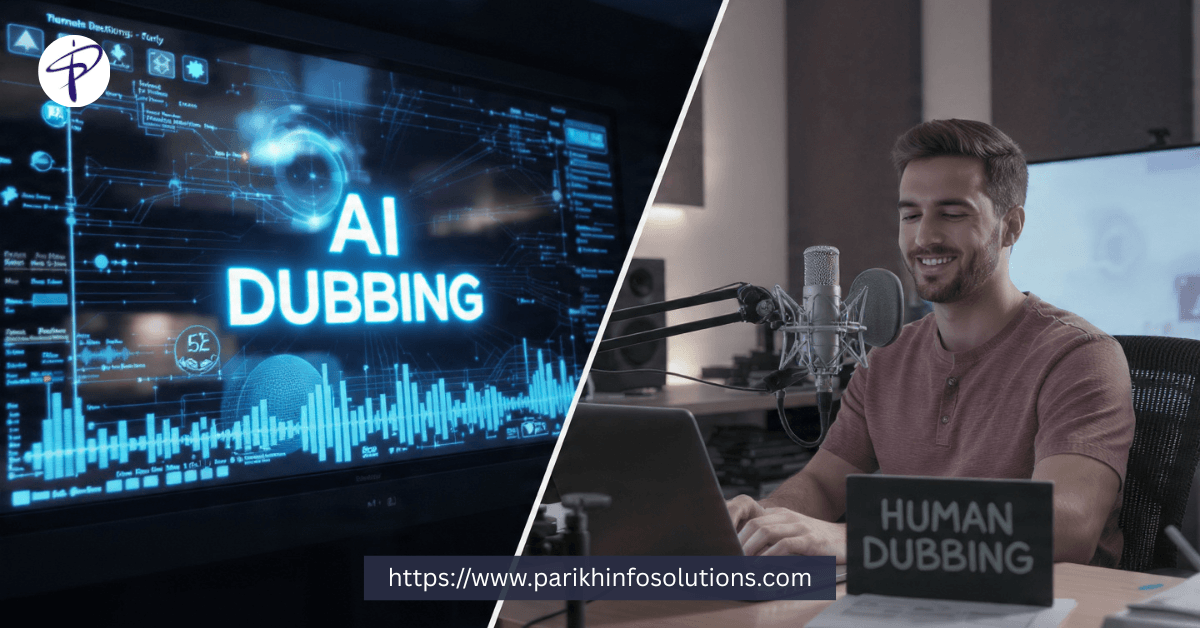
The landscape of content localization is rapidly transforming. Traditional human dubbing, a cornerstone of global entertainment, now faces a powerful contender: Artificial Intelligence. This article delves into the intricate debate between AI and human dubbing, examining their respective strengths, limitations, and the profound implications for how stories and information reach audiences worldwide. We explore whether efficiency can truly replicate authentic human expression.
The Evolving Landscape of Voice Localization Human Artistry Meets Artificial Intelligence
The foundational method of voice localization, human dubbing, carries a rich history rooted in the early days of cinema and broadcasting. Its traditional process is an intricate dance of linguistic precision and artistic interpretation. It begins with meticulous script adaptation, where experienced translators and adaptors don’t merely translate words but transmute cultural references, idioms, and humor to resonate with the target audience. This is followed by a rigorous casting process, searching for voice talents whose vocal qualities and acting prowess align perfectly with the original characters. The subsequent performance direction is paramount; a dubbing director guides actors to replicate the original performance’s emotional intensity, comedic timing, and dramatic weight, often requiring painstaking takes to achieve synchronicity with on-screen lip movements. Finally, the sound mixing engineers meticulously blend these performances with the original sound effects and music, creating a cohesive auditory experience.
The key advantages of this human-centric approach are profound. Emotional nuance is perhaps its greatest strength; human actors can convey a spectrum of feelings—from subtle melancholy to explosive joy—with an authenticity that machines currently struggle to replicate. Their cultural sensitivity allows for nuanced adaptations that transcend literal translation, ensuring jokes land, dramatic beats resonate, and character motivations are understood within the new cultural context. Comedic timing and artistic interpretation allow actors to breathe unique life into characters, often enriching the original performance through their own vocal artistry and understanding of subtext. A human can interpret a pause, a sigh, or a change in vocal pitch to convey layers of meaning beyond what is explicitly stated, turning a mere translation into an immersive performance. However, human dubbing is not without its drawbacks. The process is inherently costlier due to talent fees, studio time, and the extensive man-hours involved. It is also significantly slower, with production times extending over weeks or even months for feature-length content. Logistical complexities are ever-present, encompassing the scheduling of specific voice talents, securing studio availability, and managing multiple language teams. Furthermore, there’s a potential for subtle inconsistencies across different projects or even within a single series if different voice actors or directors are involved over time.
In stark contrast, AI dubbing emerges from the cutting edge of technological innovation, leveraging advancements such as neural networks, deep learning, and natural language processing (NLP). At its core, it relies on sophisticated text-to-speech (TTS) synthesis to generate vocal performances. The process typically involves transcribing the original audio, translating it into the target language, and then using AI models to synthesize new speech in a cloned or selected voice. Critically, these systems employ advanced algorithms for lip-syncing, attempting to match the synthesized audio’s phonemes and duration to the on-screen mouth movements of the original actors, often adjusting speech rate and timing.
The advantages of AI dubbing are compelling, particularly in an era demanding rapid content deployment. Its primary strength lies in unparalleled speed, capable of localizing hours of content in mere minutes or hours, rather than days or weeks. This translates directly into substantial cost-effectiveness by minimizing human labor, studio time, and logistical overheads. Scalability is another significant benefit, as AI systems can process vast volumes of content across numerous languages simultaneously, an impractical feat for human teams. It offers consistency in voice characteristics, allowing for the potential preservation of an original actor’s vocal identity across languages through voice cloning, or maintaining a specific brand voice. The ultimate promise of AI dubbing is real-time localization, envisioning a future where live broadcasts are dubbed instantaneously.
However, current AI dubbing still grapples with significant limitations. The most prominent is the pervasive lack of genuine emotion; while AI can mimic prosody and intonation, it often falls short of conveying authentic human feeling, resulting in a somewhat flat or ‘robotic’ delivery. It struggles immensely with complex nuances like sarcasm, irony, subtle humor, and the unspoken subtext that human actors naturally convey. Challenges with cultural idioms persist, as literal translations or even contextually aware AI can miss the underlying cultural weight of certain phrases. This can lead to the ‘uncanny valley‘ effect, where the synthesized voice is almost human, but just enough off to be unsettling. Ethical concerns also loom large, particularly regarding job displacement within the voice acting industry and the implications of voice cloning for ownership and authenticity. Currently, AI dubbing is most effective for content where emotional depth is less critical, such as
- corporate training videos
- news reports
- documentaries with factual narration
- or quick-turnaround content with lower production values
.
Human dubbing, conversely, remains unequivocally superior for high-stakes, emotionally driven content like
- feature films
- dramatic series
- and comedies
,
where performance, cultural fidelity, and character depth are paramount.
Looking ahead, the future of voice localization is increasingly leaning towards a hybrid approach, where AI tools serve as powerful assistants to human artistry. AI can already streamline parts of the traditional workflow, offering
- automated transcription of original audio
- generating initial, rough translations
- and providing detailed lip-sync analysis to guide human actors and directors
.
This allows human professionals to focus their efforts on the creative and nuanced aspects that only they can provide. One plausible model sees AI handling lower-tier content—material with smaller budgets, tighter deadlines, or less demand for emotional depth—while human dubbers continue to elevate premium productions. As technology advances, AI may bridge some of its current gaps, perhaps even developing more sophisticated emotional models and cultural understanding. Yet, the enduring value of human artistry—the ability to interpret, empathize, and imbue a performance with unique soul—is likely to remain irreplaceable for the foreseeable future. Both methods are poised to coexist and evolve, each carving out its niche within different segments of the localization market, fostering an ecosystem where efficiency meets unparalleled creativity.
Conclusions
In summary, while AI dubbing offers unparalleled speed, cost-efficiency, and scalability for certain content, human dubbing remains vital for conveying genuine emotion, cultural nuances, and artistic depth, especially in high-stakes productions. The future of localization will likely embrace a synergistic hybrid model, where AI empowers human professionals, streamlining processes while preserving the irreplaceable essence of human performance. Both technologies will coexist, catering to diverse market needs.