

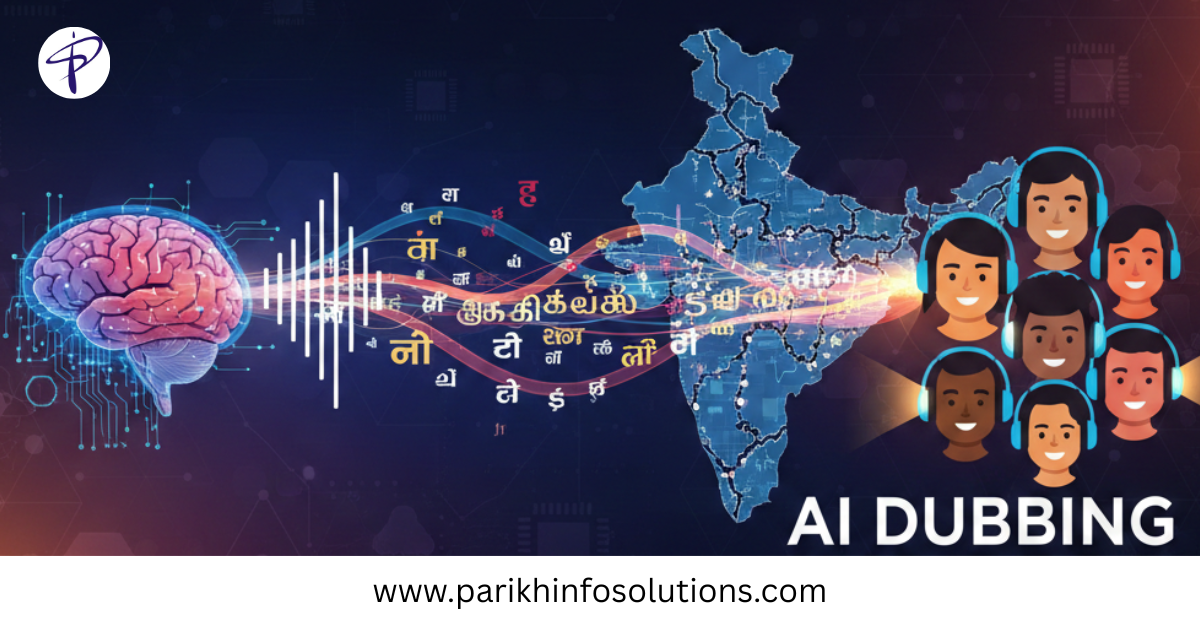
The global content landscape is rapidly evolving, with demand for localized content at an all-time high. In a culturally rich and linguistically diverse nation like India, reaching every demographic is a significant challenge. AI dubbing emerges as a transformative solution, leveraging artificial intelligence to streamline the complex process of translating and re-voicing content, thereby opening new avenues for accessibility and market penetration across the subcontinent.
The Benefits of AI Dubbing for India’s Diverse Content Market
The advent of AI dubbing marks a transformative era for India’s immensely diverse content market, offering a multitude of benefits that promise to redefine content creation, distribution, and consumption. India, with its kaleidoscope of 22 official languages and hundreds of dialects, presents a unique challenge and opportunity for content localization. Traditionally, reaching audiences across this linguistic spectrum has been a monumental, often prohibitive, task due to the significant investments in time, resources, and human talent required for each language. AI dubbing fundamentally alters this equation, making pan-Indian distribution a feasible and attractive proposition for the first time.
Foremost among these benefits is the unparalleled enhancement in content accessibility. For creators, broadcasters, and streaming platforms, AI dubbing offers an efficient pathway to penetrate previously untapped regional markets. Imagine a critically acclaimed film from the Tamil industry, once limited by its initial language release, now effortlessly reaching Marathi, Bengali, Odia, and Gujarati speaking audiences within weeks, or even days, of its original premiere. This technological leap enables both local Indian stories and global blockbusters to transcend linguistic barriers, ensuring that compelling narratives resonate with a broader demographic who prefer consuming content in their native tongues over subtitles or a lingua franca. This democratizes content consumption, bringing diverse stories closer to every Indian household.
The efficiency and speed offered by AI dubbing represent a paradigm shift from traditional methods. The conventional dubbing process involves intricate steps such as precise translation, script adaptation, casting and recording voice artists for each role and language, meticulous lip-sync adjustments, and extensive post-production mixing. This labor-intensive process can span months for a single production, incurring substantial costs. AI, conversely, streamlines this workflow dramatically. Advanced algorithms can generate high-quality translations, synthesize natural-sounding voices that convey appropriate emotional nuances, and automatically synchronize lip movements with remarkable accuracy. This slashes production timelines from weeks or months to mere days, drastically reducing localization costs and enabling a much faster time-to-market. For the fast-paced streaming industry, this agility is not just an advantage but a necessity, allowing platforms to refresh their regional language libraries with unprecedented frequency.
Moreover, the quality of AI dubbing is continually improving, moving beyond simplistic robotic voices to deliver performances that are increasingly indistinguishable from human dubbing. Contemporary AI algorithms can analyze the original audio for intricate emotional cues, inflections, and speech patterns, replicating these in the target language. The precision in lip-sync accuracy has also seen tremendous advancements. By mapping the speaker’s mouth movements and adjusting the dubbed audio to match, AI ensures a far more natural and immersive viewing experience, reducing the “dubbing effect” that often deters viewers. This commitment to quality ensures that the narrative’s integrity and emotional impact are preserved, making the dubbed version as compelling as the original.
Economically, AI dubbing is poised to profoundly impact the Indian entertainment industry. While initial concerns about job displacement might arise, the reality is often a shift and expansion of roles. AI creates demand for specialized talent in areas such as AI-assisted script adaptation, linguistic quality control, emotional nuance supervision, and ethical AI voice training. More significantly, it empowers Indian content to reach a wider global audience. An Indian film or series can now be rapidly localized into dozens of international languages, making it competitive on the world stage and opening up new revenue streams. This expanded distribution capability makes the Indian entertainment industry a stronger player globally, fostering local talent by providing a wider canvas for their work and attracting international investment due to the ease of content localization.
Crucially, AI dubbing acts as a powerful bridge for linguistic divides within India itself, fostering deeper cultural exchange and understanding. By making content from, say, the Malayalam or Bengali industries readily available in Gujarati or Punjabi, it allows diverse regional narratives, traditions, and artistic expressions to be shared and appreciated across state lines. This seamless cross-pollination of content enriches India’s cultural fabric, allowing citizens to connect with and learn from the myriad stories that define the nation’s diverse identity. This promotes a stronger sense of national unity through shared narratives, all delivered in the comfort and familiarity of one’s own mother tongue.
Conclusions
In conclusion, AI dubbing stands as a pivotal innovation for India’s content industry. It promises unparalleled efficiency, cost reduction, and enhanced accessibility, enabling content to transcend linguistic barriers within and beyond India. By embracing AI, the Indian entertainment sector can unlock new growth opportunities, reach a broader audience, and solidify its position as a global content powerhouse, fostering a more connected and entertained nation.